

Please find the final program and abstract book here: Link
==
The IASC Network on Arctic Glaciology meeting and Workshop on the dynamics and mass budget of Arctic glaciers will be held in Obergurgl, Austria, between 26-28 January 2026!
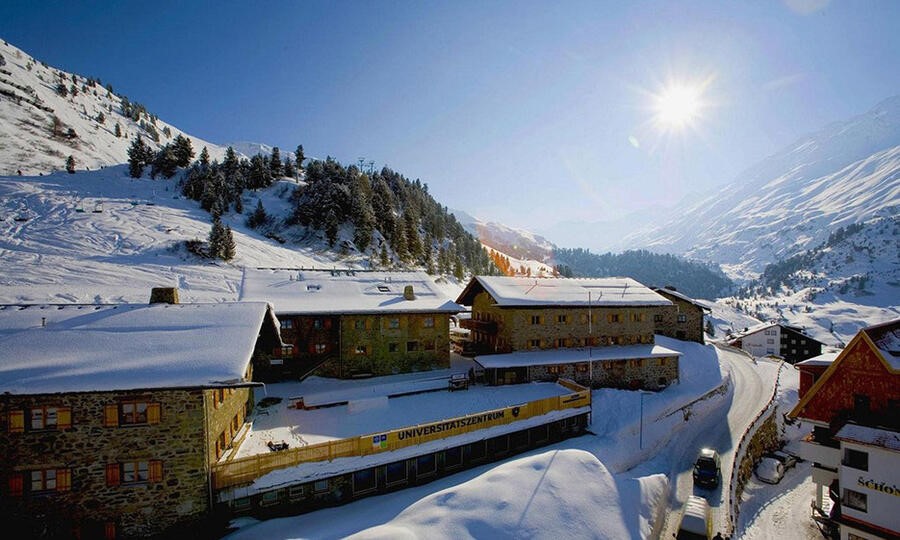
The two-and-a-half-day in-person meeting was held at the University Center, which also offers accommodation during and around the meeting. The meeting started on Monday January 26 (around 9:00) and finished around noon on Wednesday January 28. The recommended arrival date is Sunday January 25. A limited number of rooms in the University Centre are available from January 25-29. There is no registration fee for the meeting. Furthermore, thanks to IASC we can offer travel support for a selection of early-career scientists!
We welcome contributions on all aspects of glacier mass change and dynamics in the Arctic, including the Greenland Ice Sheet, using a broad range of methods, including field observations, remote sensing and modelling. In addition to this, the meeting included a special cross-cutting activity on “Arctic Glacier Hazards” (more details below).
Keynote speakers:
- Matthias Huss (ETH Zurich, Switzerland): Glacier-related hazards in the Alps - a mountain range in transition
- Steph Matti (Iceland): Managing glacier-related risks

Contributions & registration
Contributions in the form of oral presentations and/or posters are welcome. Oral presentations will likely be 15 minutes, including discussion.
Presentations will also be live-streamed, but we do not accept online contributions and interaction with the audience in Obergurgl is limited/absent.
Please register for the meeting and submit your abstract here [deadline 28 November]: [REGISTRATION CLOSED]
Cross-cutting activity on Arctic glacier hazards
Glaciers and their retreat can lead to major hazards with large consequences for people and infrastructure. Such risks are exacerbated as human activities increasingly expand into regions prone to glacier hazards, such as the Arctic (Hock and Truffer, 2024). In our activity, we focus particularly on glacier hazards that are relevant for communities, infrastructure, tourism and industry in the Arctic, such as floods (e.g. glacier outburst floods and collapsing ice-dammed lakes), retreat-induced landslides and rockfalls, iceberg calving and drift, and glacier surges. With this theme, we aim to bring together glaciologists, social scientists, atmosphere scientists, terrestrial researchers, and Arctic (Indigenous) community stakeholders. We aim to: 1) identify key glacier hazards, 2) analyse the physical processes involved, 3) establish future research directions, 4) discuss exposure and vulnerability of Arctic society in a present and future climate, and 5) identify adaptation and mitigation solutions in high-risk areas. Confirmed keynote speakers: Matthias Huss and Steph Matti.
This cross-cutting activity is endorsed and supported by the Cryosphere, Atmosphere, Terrestrial, and Social & Human working groups of IASC (link). The activity will include two or more presentation sessions, followed by a discussion session.
Accommodation & half-board
We encourage participants to book a room with half-board at the University Center during the meeting. Double rooms with half-board can be booked for the period January 25-29. A few rooms are available a day longer on both ends.
Daily daily rates per person including half-board:
€162 for a shared room (student rate: €125)
€217 for single occupancy (student rate: €180)
Breakfast and dinner at the University Center are included in the prices above, lunches are not. Breakfast includes a comprehensive buffet; dinner includes a choice of 2-3 main dishes, soup, salad and desert).
You book a room at the University Center through the registration & abstract submission form. You will be prompted to choose the type of room (shared or not), a room-mate (if you already have someone in mind) and your dates of arrival and departure. There is no need to contact the University Centre yourself to reserve a room.
This year we unfortunately have slightly fewer rooms than usual at the University Center. We will apply a first-come-first-serve principle, i.e. those who register first will get the rooms. To accommodate as many as possible at the University Center, we strongly encourage to share rooms! If you are looking for a rooming partner, please add your name to this Google sheet. Those that cannot stay at the University Center will be informed about this shortly after the deadline.
How to get there
More details on how to get to the University Center in Obergurgl by car, train, bus and plane can be found here: https://www.uibk.ac.at/uz-obergurgl/kontakt/
By plane, Obergurgl is best accessed via Innsbruck (Austria), but also via Zurich (Switzerland) or Munich (Germany), followed by a combination of train and bus to reach Obergurl via the village Ötztal. The train from Innsbruck to Oetztal takes about ½ hour (runs frequently), the train from Zurich airport to Oetztal about 3.5 hours and from Munich airport takes about 4 hours. Train tickets including the bus from Oetztal Bahnhof to Obergurgl Zentrum can be bought here. Tickets from Switzerland and Germany are typically much cheaper if you buy them early. You do not need a seat reservation to take the train. Some may find it convenient to share a rental car (3-hour drive from Munich to Obergurgl).
The bus from Ötztal up a winding road along the narrow valley takes about 1.5 hours and runs every 30 or 60 minute between roughly 6 am and 11 pm. The bus leaves directly in front of the Oetztal Bahnhof (train station) and you get off at Obergurgl Zentrum (the very last stop). From there it is a few minutes walk further up the valley. You buy the bus ticket online or on the bus (cash).
Financial support for early-career scientists
We have some financial support from the IASC Cryosphere, Atmosphere, Terrestrial and Social & Human working groups to enable early career scientists to participate in the meeting and cross-cutting activity. Eligible for the funding will be early career scientist who meet the following criteria:
- are within 5 years after finishing their PhD
- are affiliated with an institution in an IASC member country (Austria, Belgium, Canada, China, Czech Republic, Denmark, Finland, France, Germany, Iceland, India, Italy, Japan, Republic of Korea, The Netherlands, Norway, Poland, Portugal, Russia, Spain, Sweden, Switzerland, United Kingdom, USA)
- have submitted an abstract for the workshop
- have a research background relevant to the meeting
- have not yet received IASC travel support more than three times within the five years prior to January 2026.
The financial support is limited and will usually not cover all expenses for those granted. If support is granted, reimbursement will be after the meeting through the IASC Office. Detailed information will be provided to those selected for the travel support.
To apply for the early-career financial support, please complete the separate form here latest by November 28: https://forms.gle/dRani95MooKTHiVN8. A decision on the funding will be taken in the days after the deadline. The selection of participants receiving funding will be based on several criteria including geographic diversity and gender.
Skiing
The Obergurgl-Hochgurgl ski-resort is a beautiful snow-secure skiing area between 1800 and 3080 m a.s.l. with 25 lifts and 112 km of slopes. Skiing is possible during afternoon breaks (~12:00-15:30) and before and after the meeting.
For more details about the skiing opportunities and ski passes, please visit the website https://www.gurgl.com/winter.html.
The next Workshop on the dynamics and mass budget of Arctic glaciers and IASC Network on Arctic Glaciology annual meeting will be held the University Center in Obergurgl, Austria, on 26-28 January 2023!
General information
The two-and-a-half-day meeting is open to all interested in Arctic glaciology and will be held in-person. Presentations will also be live-streamed, but we do not accept online contributions and interaction with the audience in Obergurgl is limited/absent. The meeting will start around 9:00 in the morning on Thursday January 26 and finish around noon on Saturday January 28. The recommended arrival date is January 25 (Wednesday). Rooms in the University Centre are available from January 25 to 29. Thanks to funding from IASC we can provide travel support for a selection of early-career scientists and do not ask for a registration fee!
Contributions
We welcome contributions on all aspects concerning the mass balance and dynamics of Arctic glaciers, including the Greenland Ice Sheet, and that utilize a broad range of methods, including field observations, remote sensing and modelling. In addition to this, the workshop will include a special cross-cutting session on “Glacier-atmosphere interactions in a warming and wetting Arctic”, which aims to provide an inter-disciplinary forum that brings together glaciologists and atmospheric scientists.
Contributions in the form of oral presentations and/or posters are welcome. Presentation will be 15-20 minutes, including discussion. For those who present a poster, time will be reserved in the program to give a short 2-3 minute introduction to the poster.
Please register for the meeting and submit your abstract here [deadline 25 November]: https://forms.gle/fDpA7jXMd9mJzhSE9
Cross-cutting activity
During the meeting we will host a special cross-cutting session on ”Glacier – atmosphere interactions in a warming and wetting Arctic”. This cross-cutting activity is endorsed and supported by the Cryosphere and Atmosphere working groups of IASC (link). The activity aims to bring together experts within glaciology and atmospheric sciences, thereby fostering multi-disciplinary research in the Arctic. The cross-cutting activity will include one or more presentation sessions, followed by a discussion session. Confirmed keynote speakers: Gudfinna Adalgeirsdottir and Brice Noël.
Topics may include (but are not constrained to):
- Atmospheric circulation patterns and the impact on the Arctic land-ice mass budget
- Precipitation and snowfall in the Arctic – observations & modelling
- Coupling of glaciers and atmosphere in general circulation models (GCMs), regional climate models (RCMs) and earth system models (ESMs)
Accommodation & half-board
We encourage participants to book a room with half-board at the University Center during the meeting. Double rooms with half-board can be booked for the period January 25-29 at the following rates: ca. 135 euro for a shared room, ca. 185 euro for single occupancy. Reduced prices of ca. 110 euro (shared room) and 160 euro (single occupancy) apply for students. Breakfast and dinner at the University Center are included in the prices above, lunches are not. Since we have limited rooms available and hope to accommodate as many as possible in the University Center, room sharing is strongly encouraged. Since space may be limited, please do not wait too long with your registration!
To book a room at the University Center, please use the registration & abstract submission form and choose the type of room (shared or not), a room-mate (if you already have someone in mind) and your dates of arrival and departure. You will pay for the room at the University Center.
How to get there
Obergurgl can be reached via Innsbruck (and Ötztal) by bus or a combination of train and bus. The travel time is around 2 hours. For connections visit https://tickets.oebb.at/en/ticket. An alternative hub is Munich, Germany, from which train connections to Innsbruck exist (expect 2 additional hours). Some may find it convenient to share a rental car (3-hour drive from Munich to Obergurgl).
Financial support for early-career scientists
We have some financial support from the IASC Cryosphere and Atmosphere working groups to enable early career scientists to participate in the meeting and cross-cutting activity, in particular. Eligible for the funding will be early career scientist who meet the following criteria:
- are within 5 years of finishing their PhD
- are affiliated with an institution in an IASC member country (Austria, Canada, China, Czech Republic, Denmark, Finland, France, Germany, Iceland, India, Italy, Japan, The Netherlands, Norway, Poland, Portugal, Russia, South Korea, Spain, Sweden, Switzerland, United Kingdom, USA)
- have submitted an abstract for the workshop
- have a research background relevant to the meeting
- have not yet received IASC travel support more than three times within the 5 years prior to January 2023
Please note that our support is limited and may not cover all expenses for those granted. If support is granted, reimbursement will be after the meeting through the IASC Office. Detailed information will be provided to those selected for the travel support.
To apply for the financial support, please complete the separate form here latest by November 25: https://forms.gle/tTQHtvj6mwj1xmjp8. A decision on the funding will be taken in the days after the deadline.
Skiing
The Obergurgl-Hochgurgl ski-resort is a beautiful snow-secure skiing area between 1800 and 3080 m a.s.l. with 25 lifts and 112 km of slopes. For more details about the skiing opportunities and ski passes, please visit the website https://www.gurgl.com/winter.html.

As part of the MAGICS project (Mass balance of Arctic Glaciers and Ice sheets in relation to the Climate and Sea level changes) a compilation of existing in situ mass-balance observations on Arctic glaciers was made. These data can be found on this site. The data was updated up to 2003. All data can also be found on the website of the World Glacier Monitoring Service (WGMS)
Arctic research stations
Greenland
Svalbard
Northern Scandinavia
- Tarfala (67°55'N, 18°35'E) Website
Mass balance field sites
The data links below include mass balance data up to 2003. For up to date mass balance data of these glaciers, please download the dataset from the WGMS website.
Alaska
- Wolverine Glacier (60°24'N, 148°55'W, Wo) Data
- Gulkana Glacier (63°16'N, 145°25'W, Gu) Data
- McCall Glacier (69°18'N, 143°50'W, Mc) Website Data
Canadian Arctic
- Melville S. Ice Cap (75°25'N, 125°10'W, MSI) Data
- Meighen Ice Cap (79°27'N, 99°08'W, Me) Data
- Baby Glacier (79°26'N, 90°58'W, Ba) Website Data
- White Glacier (79°26'N, 90°40'W, Wh) Website Data
- Devon Ice Cap (75°20'N, 82°30'W, DI) Data
- Drambuie Glacier (80°00'N, 75°00'W, Dr) Data
Greenland
- Kangerlussuaq transect (67°N, 47-50°W, Ka) Website
- Storstrømmen (77°10'N, 22°30'W, Sts)
Iceland
- Hofsjökull/Satujökull (65°00'N, 19°00'W, Ho) Website (Wikipedia) Data
- Tungnaarjökull (64°20'N, 17°40'W, Tu) Data
Svalbard
- Austre Brøggerbreen (78°54'N, 11°50'E, Br) Website (Glaciers online) Data
- Kongsvegen (78°51'N, 12°30'E, Ko) Website (Glaciers online) Data
- Vöringbreen (78°02'N, 13°58'E) Data
- Finsterwalderbreen (77°28'N, 15°18'E, Fi) Data
- Longyearbreen (78°10'N, 15°31'E) Website (Glaciers online) Data
- Bogerbreen (78°07'N, 15°37'E) Data
- Hansbreen (77°05'N, 15°40'E, Ha) Data
- Bertilbreen (78°30'N, 15°50'E, Be) Data
- Daudbreen (78°04'N, 18°49'E) Data
Northern Scandinavia
- Engabreen (67°00'N, 14°00'E, En) Data
- Storglaciären (67°55'N, 18°35'E, Sg) Data
- Mârmaglaciären (68°05'N, 18°40'E, Ma) Data
Russian Arctic
Sorry, we could not find the page you were looking for...
We recommend that you try one of the following.